

If you've ever lost a sale because a potential customer couldn't navigate your website in their language, or because your front-desk person and a caller couldn't understand each other, you already know the business case for multilingual communication. What you may not know is how much of that gap AI can close today — and where it still falls short in ways that matter.
This isn't about going global. It's about the Spanish-speaking community two towns over, the Vietnamese restaurant suppliers your competitor ignores, or the recent immigrants in your city who'd choose you if only they could easily reach you. These are real, often underserved customer bases. AI translation has become good enough to serve many of their needs — but only if you use it the right way.
What AI Translation Can Actually Do Now
The translation tools available today — Google Translate, DeepL, and the language models built into tools like ChatGPT, Claude, and Microsoft Copilot — are dramatically better than they were five years ago. For everyday business communication in major world languages (Spanish, French, Mandarin, Portuguese, Arabic, Vietnamese, and others), they're often genuinely good.
Here's where they reliably earn their keep:
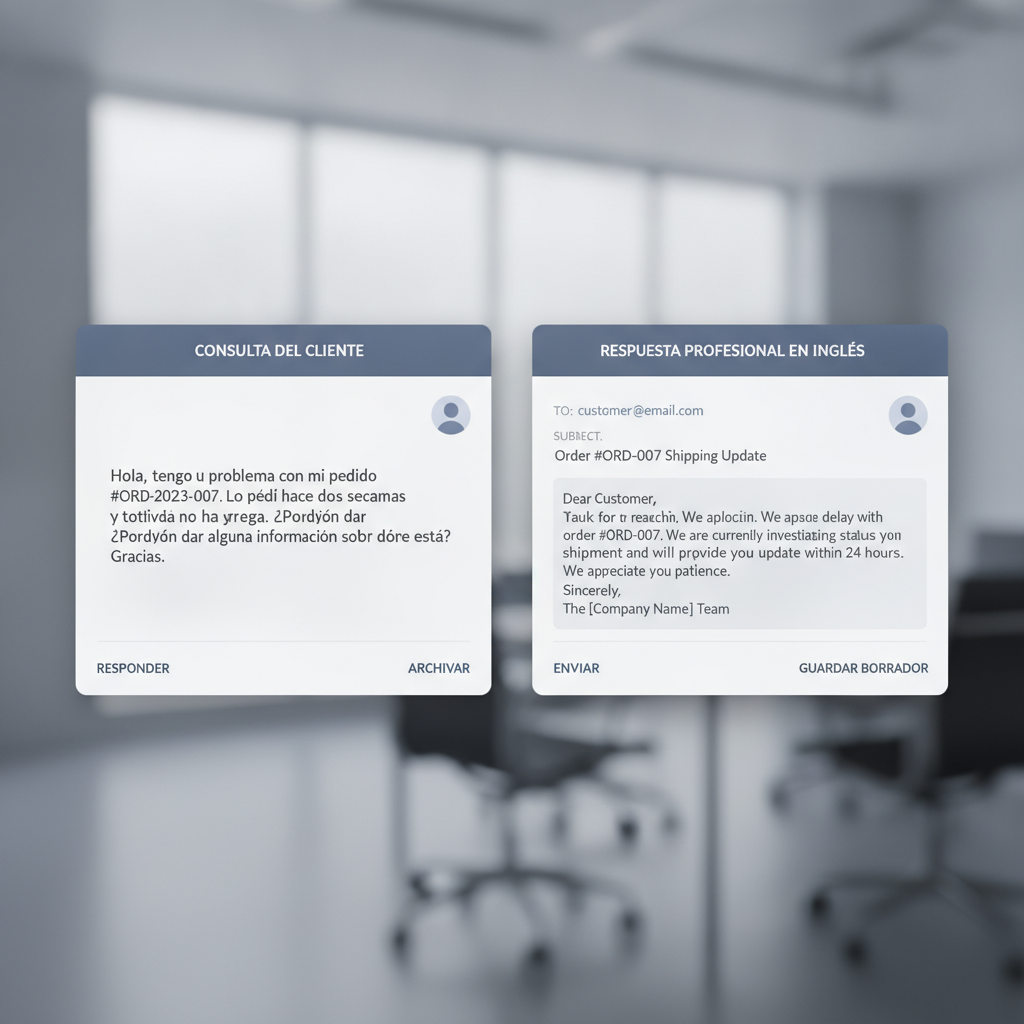
Customer inquiries via email or chat. A customer writes to you in Spanish asking about your return policy or your availability next Tuesday. AI can read that message accurately and help you draft a clear, natural-sounding reply. This used to require either a bilingual employee on staff or leaving the email unanswered. Now it's a two-minute task.
Website content translation. Your "About Us" page, your service descriptions, your FAQ — these are good candidates for AI translation, especially if you review them once with a bilingual speaker before publishing. Static, factual content in plain language translates well.
Internal communication support. If you have employees who are more comfortable in another language, AI can help bridge the gap in written communication — instructions, policy summaries, scheduling notes.
Basic marketing copy. Social media posts, promotional emails, simple ad copy in conversational language — AI handles these reasonably well for common languages.
The Tools Worth Knowing
You don't need a big budget to get started. Here's a practical overview:
DeepL is widely regarded as producing the most natural-sounding translations, especially for European languages. The free tier handles documents up to a certain size; the Pro plan ($8.74/month at the individual level) removes limits and adds an API for integration. If translation quality is the priority, start here.
Google Translate is free, ubiquitous, and good enough for many purposes. It's particularly useful for quickly understanding what an incoming message says, even if you'd use something else to compose your reply.
ChatGPT or Claude (either via their apps or API) can do translation with added flexibility — you can ask them to translate in a specific tone, adapt for a particular audience, or explain a phrase they're unsure about. For nuanced marketing copy or anything where tone matters, this flexibility is an advantage over pure translation tools.
Your existing software may already have this built in. Zendesk, Intercom, HubSpot, and other CRM and customer service platforms have added AI translation features. Check what you're already paying for before buying something new.
Where AI Translation Gets You in Trouble
Here's where a lot of businesses make expensive or embarrassing mistakes: they assume that because AI translation is good on average, it's reliable in every case. It isn't.
Legal and compliance documents. Contracts, terms of service, liability waivers, insurance documents — these require human translators, full stop. A mistranslated phrase in a legal document isn't just embarrassing; it can be unenforceable or expose you to liability. If you serve customers who need to sign anything, invest in a certified human translation.
Medical and safety information. If you're in healthcare, home services, food, or any industry where instructions affect someone's health or safety, AI translation is not the right tool for those specific communications. The stakes are too high and the margin for error too narrow.
Idioms, humor, and culturally specific references. AI knows that "break a leg" isn't literally about legs, but subtler cultural references — regional expressions, humor that depends on context, brand voice that leans heavily on wordplay — often come out flat or wrong. A tagline that's clever in English can be baffling or inadvertently offensive in another language.
Low-resource languages. AI translation is excellent for languages with a lot of training data (Spanish, French, German, Mandarin). It gets less reliable for less common languages — Hmong, Haitian Creole, Tigrinya, many indigenous languages. If your customer base speaks one of these, don't assume AI is handling it well. Test it with a native speaker.
Anything going on a physical product or permanent signage. A typo on your website costs you five minutes to fix. A typo on 10,000 printed menus or a storefront sign costs real money and real embarrassment. Human review before printing. Always.
A Simple Framework: When to Use AI, When to Use a Human
Think of it this way:
| Situation | AI OK? | Human Needed? |
|---|---|---|
| Reading an incoming customer email | ✅ Yes | Not necessary |
| Drafting a routine reply | ✅ Yes | Review for tone |
| Website FAQ / service descriptions | ✅ Yes, with review | One-time review |
| Marketing copy, short social posts | ✅ Usually | Review for brand voice |
| Contracts, legal terms, waivers | ❌ No | Yes — certified translator |
| Medical / safety instructions | ❌ No | Yes |
| Taglines, slogans, brand voice | ⚠️ Use with caution | Preferred |
| Physical signage, print materials | ⚠️ Use with caution | Review before printing |
The general rule: use AI for high-volume, low-stakes communication and to understand what's being said. Use humans for low-volume, high-stakes documents and for anything that represents your brand permanently.
How to Set This Up Without Overcomplicating It
Step 1: Identify your actual languages. Look at your customer data, your zip code demographics, your inquiry history. Where are customers actually getting stuck? Start with one or two languages, not fifteen.
Step 2: Pick one tool and learn it well. DeepL Pro or a ChatGPT subscription is enough to get started. Don't buy a specialized multilingual platform until you've proven the demand justifies it.
Step 3: Create a basic review process. Find one bilingual speaker — a current employee, a college student you pay hourly, a professional contact — who can spot-check your translated content before it goes live. You don't need to pay them for every email; you need them to review your website pages and any templated messages you'll send repeatedly.
Step 4: Build a small library of reviewed templates. Your ten most common customer situations — hours, pricing, booking, returns, complaints — translated and reviewed. With these in hand, your team can handle the majority of non-English inquiries using AI to adapt the templates, without starting from scratch each time.
Step 5: Flag the no-go zones. Make it explicit with your team: any legal document, any safety instruction, any print material goes through human review before it reaches a customer. Write it down. It only takes one incident to make this policy worth having.
The Embarrassing Misfire: How to Avoid It
Most AI translation mistakes fall into three categories: wrong vocabulary, wrong register (too formal or too casual for the context), and culturally tone-deaf phrasing.
The safest prevention: before you publish anything translated, run it back through the AI in the other direction. Ask it to translate your translated Spanish copy back into English. If the meaning survived the round trip, you're probably in decent shape. If it came back weird, something got lost — go back and simplify your original before translating again.
Simpler source text translates better. Short sentences. Plain vocabulary. No idioms. If your English copy is full of colloquialisms and clever wordplay, clean it up before sending it through a translator — human or AI.
And if you're targeting a specific community — Mexican-American customers, Brazilian customers, Moroccan-French customers — know that "Spanish" and "French" and "Arabic" are not monoliths. Regional vocabulary and cultural norms differ. When possible, get a review from someone who actually represents that community.
What This Looks Like in Practice
A home services company in a metro area with a large Spanish-speaking population installs a Spanish chat widget on their website (built into their existing chat tool with a translation toggle). They spend one afternoon creating ten template responses — service descriptions, scheduling confirmations, follow-up messages — reviewed by a bilingual employee. Their Spanish-speaking inquiry volume increases noticeably within a few weeks. They're not running a translation department. They're using tools they already have, slightly more intentionally.
That's the scale this operates at for most small businesses: not a massive initiative, but a deliberate choice to remove a barrier that was costing you customers.
This is the kind of practical setup — figuring out what tools you have, where the gaps are, and what a sensible workflow looks like — that we work through with clients. It's not complicated, but it does help to look at it systematically.
The Bottom Line
AI translation won't replace a professional translator for documents that matter legally or medically. But for the everyday work of customer communication — answering questions, explaining services, making someone feel like they can actually do business with you — it's genuinely capable, and it's available right now at a price point that makes sense for a small business.
The businesses that win here aren't the ones with the biggest translation budget. They're the ones who take an hour to figure out which two languages their customers actually speak, set up a simple process, and stop leaving inquiries unanswered because nobody on staff happened to speak that language today.
If you want to think through what this could look like for your specific business — which languages to prioritize, which tools fit your existing setup, and where your current process has gaps — let's talk. A single conversation is usually enough to make the path pretty clear.