
When Amazon tells you your package is delayed before you even notice it's late, or your bank's chatbot resolves a billing dispute at 11 PM without a single hold queue — that's AI working in the background. And it's quietly doing something else, too: resetting what your customers think "normal" service looks like.
This isn't a crisis. But it is a shift worth understanding, because the gap between what a large company can do and what a small business can do is narrowing — and in some ways, the expectations that gap used to excuse are disappearing with it.
Here's the honest picture of what's changing, what it means for a business your size, and how to stay ahead of it without losing the thing that actually makes you competitive.
The baseline has moved
A few years ago, waiting 24 hours for a business to respond to an email inquiry felt normal. Today, after years of Amazon, Uber, and Airbnb conditioning people to instant confirmations and real-time updates, that same 24-hour wait feels slow — even for a 12-person plumbing company or a boutique law firm.
The data backs this up. According to HubSpot's customer service research, 90% of customers rate an "immediate" response as important or very important when they have a service question — with "immediate" defined as 10 minutes or less. That number was significantly lower five years ago.
The mechanism here isn't complicated: when one part of someone's life gets faster, impatience creeps into other parts. Your customers are getting instant answers from their bank, their insurance app, and their e-commerce platforms. When they reach out to you and don't hear back until tomorrow morning, the contrast is sharper than it used to be.
None of this means you need to hire a night-shift customer service team. It means the bar for "acceptable" has moved, and ignoring that costs you — usually quietly, in the form of inquiries that go cold or reviews that mention "slow to respond."
What customers actually expect now (and what they don't)
Let's be specific, because "AI is raising expectations" is the kind of thing that could mean anything.
What has genuinely shifted:
-
Response speed on basic inquiries. Questions like "do you have availability next Tuesday?" or "what's your pricing for X?" — customers increasingly expect a fast answer, even outside business hours. Not necessarily a human answer. Just an answer.
-
Proactive communication. If an appointment is rescheduled, a shipment is delayed, or a project hits a snag, customers now expect to be told before they have to ask. Large companies do this automatically. Small businesses that don't are increasingly conspicuous.
-
Follow-through without follow-up. If a customer has to send a second email to get a quote they were promised, or call to confirm an appointment that should have a confirmation, they notice. AI has made larger companies reliable at the mechanics of follow-through. Customers are starting to expect it everywhere.
What hasn't shifted (and might actually be your edge):
-
Genuine relationships. Nobody expects a chatbot to know that their last project was a nightmare and this one needs extra care. Nobody wants AI-generated empathy when something goes wrong.
-
Complex problem-solving. For anything that requires actual judgment — a custom quote, a tricky legal question, a nuanced design decision — customers don't want a bot. They want a person who knows what they're doing.
-
Personal accountability. One thing large companies consistently fail at: someone owning a problem end-to-end. Small businesses can offer this. It's not table stakes — it's a genuine differentiator.
The mistake would be trying to compete with Amazon on Amazon's terms. You won't win that game. The right move is covering the basics that are now expected (speed on simple stuff, proactive communication) while doubling down on the things AI genuinely can't replicate.
The realistic toolkit for a small business
You don't need an AI team or a six-figure software budget to meet the new baseline. Most of what's needed falls into two categories: automated responsiveness and systematized follow-through.
Automated responsiveness
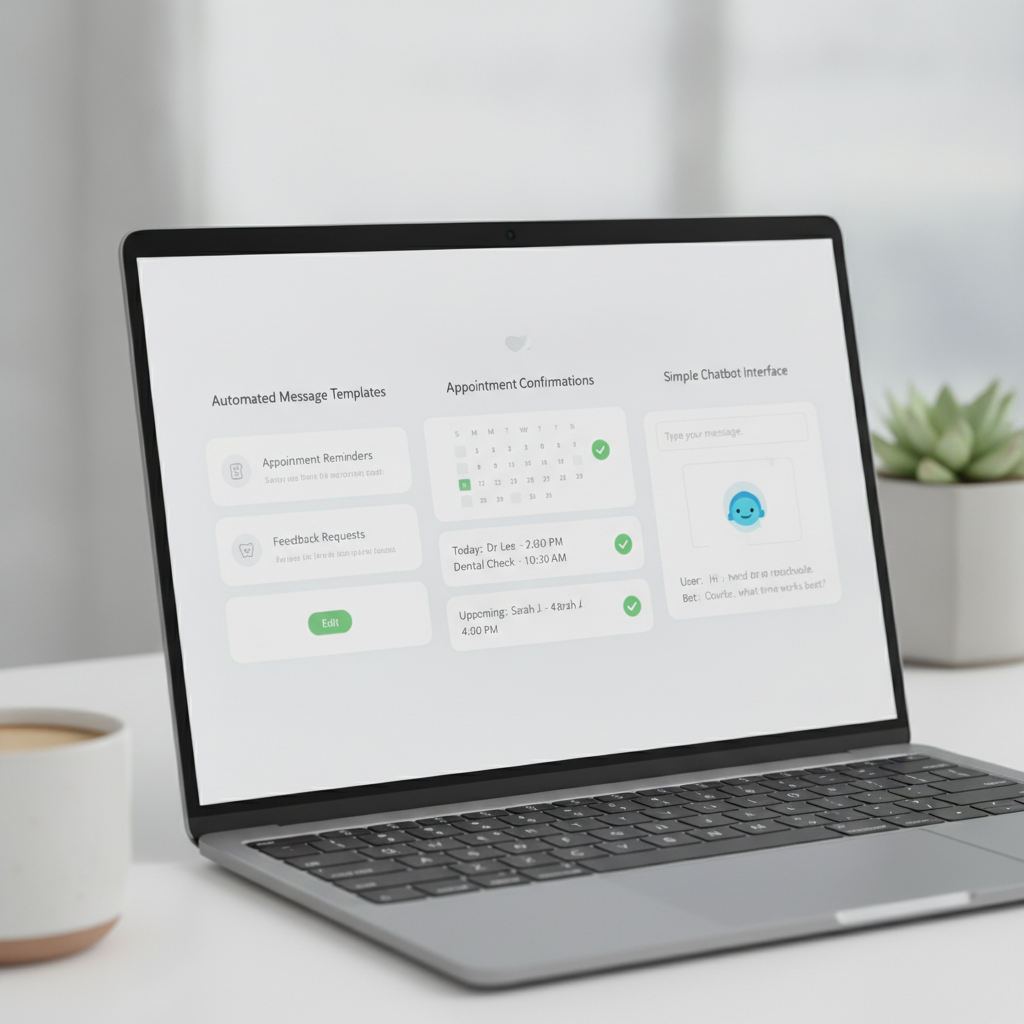
A well-configured chatbot on your website — something like Tidio, Intercom's lighter plans, or even a simple AI assistant built on tools like ChatGPT's API — can handle after-hours inquiries, answer common questions, and qualify leads before you ever see them. For most small businesses, setup is a weekend project, not a major initiative.
The goal isn't to fool anyone into thinking they're talking to a human. It's to make sure someone reaching out at 9 PM on a Friday gets something useful — your hours, a prompt to book a call, or an answer to "do you do X?" — instead of silence.
Email automation through tools like ActiveCampaign or even HubSpot's free tier can handle the basics of lead follow-up without you manually tracking who got what. A new inquiry comes in, they get a response within minutes, not a day.
Systematized follow-through
Most small businesses lose customers not because they're bad at the work, but because they're inconsistent at the around the work — the confirmations, the reminders, the status updates. An appointment reminder texted automatically 24 hours out, a follow-up email after a job is done asking if everything looks good — these aren't flashy, but they're exactly what AI has trained customers to expect.
Tools like Jobber, HoneyBook, or industry-specific CRMs handle this for many trades and service businesses. If you're not using something like this, that's often the highest-leverage first step — not because AI is exciting, but because consistency is what customers notice.
The one thing you shouldn't sacrifice
Here's the tension: as you automate more of your communication, it's easy to accidentally automate the warmth out of it, too.
A templated email is fine. A templated email that sounds like it was written by a compliance department is not. The small businesses that navigate this well are the ones that use automation for the mechanics (timing, triggers, routing) and keep the voice human. Your follow-up email after a job should sound like you, not like a receipt.
The personal touch isn't a nice-to-have. For most small businesses, it's the primary reason customers choose you over a larger competitor with more resources. AI has given you the ability to be as fast and consistent as the big players on the simple stuff. Don't use that ability as an excuse to be less human on the rest.
The combination — reliable on the basics, genuinely personal where it counts — is exactly where small businesses can and should win.
What you can safely ignore
Not all the pressure here is real. Some of it is vendor-driven hype designed to sell you software you don't need.
You probably don't need:
- A full AI chatbot that simulates deep conversation. For most small businesses, a simple FAQ bot and a form-to-email system is more useful, cheaper, and less likely to embarrass you when it gets something wrong.
- AI-generated personalized marketing at scale. If you have 400 customers, you don't need a machine-learning personalization engine. You need good follow-up habits.
- 24/7 live chat staffed by AI. Unless you're in an industry where customers genuinely need real-time help around the clock, a clear "we respond within 2 hours during business hours" message is honest, sets expectations, and is completely fine.
The customers who will leave you because you don't have a round-the-clock AI chatbot were probably not going to become loyal regulars anyway. The ones worth keeping appreciate responsiveness during reasonable hours and a human being when something matters.
Where to start
If you're reading this and thinking "we're behind," the gap is almost certainly smaller than it feels. Most of what customers now expect from small businesses comes down to a few specifics:
- Fast initial response — especially to new inquiries. If this is falling through the cracks after hours, a simple auto-reply or basic chatbot closes most of the gap.
- Consistent follow-through — confirmations, reminders, check-ins. If you're doing this manually and unreliably, a CRM or service management tool is likely the right first move.
- Proactive communication — don't make customers ask for updates. Build the habit (and ideally the system) of telling them before they need to ask.
None of this requires a major AI investment. It requires using the tools that exist — many of which cost less per month than a single lost customer — and using them intentionally.
This is the kind of diagnostic work we do with clients at Blueprint AI Strategy: figure out where the real gaps are, match them to the right tools, and build something that actually fits the business. Not a technology project. A customer experience improvement that happens to use technology.
If you're trying to figure out which of this applies to your business — and which of it you can ignore — let's talk. A single conversation is usually enough to see where the real leverage is.