

Hiring is one of the most time-consuming things a small business owner does, and one of the most consequential. A bad hire at a 20-person company doesn't disappear into the org chart — it costs real money, real time, and sometimes real damage to your team.
So when AI tools promise to speed up recruiting, the appeal is obvious. And some of that promise is real. But hiring is also one of the areas where AI can get a small business into legal trouble the fastest — discrimination claims, EEOC complaints, and state-level AI bias laws are not hypothetical risks. They're already showing up in court.
This guide will tell you exactly where AI helps, where it hurts, and what checkpoints to keep no matter what you automate.
Where AI Genuinely Saves Time in Hiring
Writing Better Job Postings, Faster
This is the clearest win, and it's underused.
Most small business job postings are either vague ("must be a team player, self-starter, detail-oriented") or unintentionally intimidating — loaded with requirements that aren't actually required, or written in a tone that signals the wrong culture. Both problems cost you candidates.
AI tools like ChatGPT or Claude are genuinely good at drafting job descriptions when you give them the right inputs: the actual duties, the real must-haves versus nice-to-haves, the compensation range, and the tone you want. A 10-minute conversation with an AI can produce a first draft that would have taken you an hour to write — and the AI will often flag when you've listed 12 requirements for what sounds like a $45,000 role.
One practical prompt to try: "Write a job posting for a [role] at a [type of business]. Must-haves are [X, Y, Z]. Nice-to-haves are [A, B]. The salary range is [$X–$Y]. The tone should be direct and human, not corporate."
Run the output through a free tool like Textio or even just ask the AI itself: "Does this posting contain any language that might discourage applicants by gender, age, or background?" It won't catch everything, but it will catch some obvious slip-ups.
Drafting Structured Interview Questions
Unstructured interviews — where you just "have a conversation" with candidates — are one of the worst predictors of job performance and one of the highest-risk formats for bias claims. Structured interviews, where every candidate gets asked the same questions evaluated against the same criteria, hold up much better legally and produce better hires.
AI is excellent at generating structured interview questions once you tell it the role and the competencies you care about. Ask it for behavioral questions ("Tell me about a time when…") tied to specific skills like conflict resolution, prioritization under pressure, or learning a new system quickly. Ask it to suggest a simple scoring rubric alongside each question.
This doesn't have to be rigid or robotic. Structure means consistency, not interrogation. And it protects you: if a candidate ever alleges that your process was discriminatory, a documented, consistent interview protocol is one of your best defenses.
Organizing and Tracking Applicants
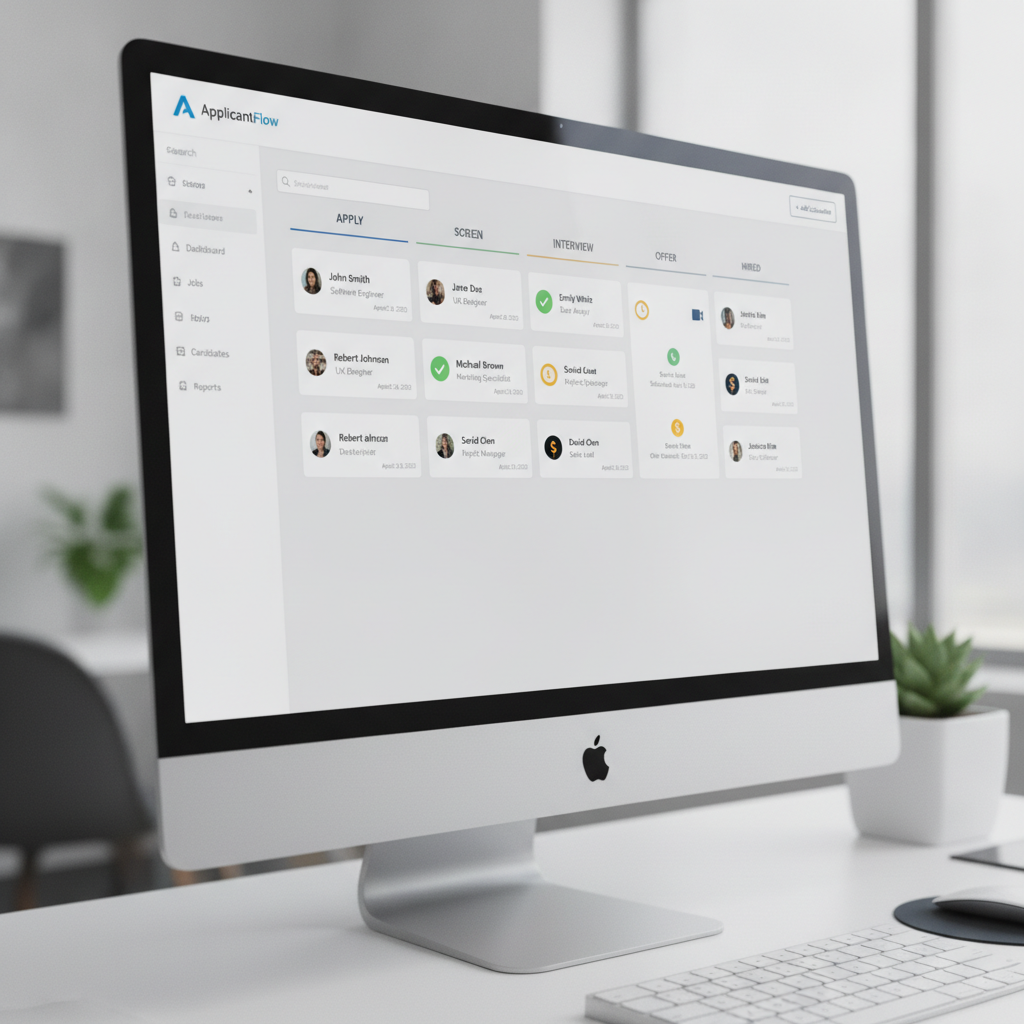
If you're currently managing candidates through a folder of email attachments or a spreadsheet you update sporadically, even a basic applicant tracking system (ATS) — many of which now include AI features — will save you time and reduce the risk of missing good candidates.
Tools like Workable, Breezy HR, or Zoho Recruit are built for small businesses, cost less than you probably think (some have free tiers), and handle the organizational work of collecting applications, scheduling interviews, and keeping notes in one place. This isn't glamorous, but losing a strong candidate because you forgot to follow up is a real and common problem.
Where AI Creates Real Legal Risk
Automated Resume Ranking and Scoring
This is the big one. Several AI tools — and some ATS platforms — offer automated resume scoring: feed in a pile of applications, and the AI ranks them by predicted fit. The pitch is efficiency. The reality is that these systems have a documented history of encoding bias.
The most famous example is Amazon's internal AI recruiting tool, built by one of the most sophisticated engineering organizations in the world, which had to be scrapped after it was found to systematically downgrade résumés from women. Why? Because it was trained on historical hiring data, and Amazon's historical hires skewed heavily male. The AI learned to replicate that pattern.
Your business doesn't have Amazon's engineering resources. It does have Amazon's exposure to the same problem.
Under Title VII of the Civil Rights Act, the EEOC's guidance on employment tests and selection procedures applies to automated screening tools. If your AI scoring system produces a disparate impact on candidates of a protected class — even without any intent to discriminate — you can face liability. And several states (Illinois, New York City, Maryland, and others) now have specific laws governing AI use in hiring, including requirements to audit for bias. It's part of the broader AI compliance picture every small business should understand.
The practical rule: do not use any tool that makes or heavily influences a pass/fail decision on candidates without a human reviewing the underlying reasoning. Flagging? Sometimes fine. Ranking or cutting? High risk without careful auditing you probably don't have the resources to do well. That's a clear case of a decision to keep away from AI.
AI Video Interview Analysis
Some platforms claim to analyze facial expressions, tone of voice, or word choice in recorded video interviews to score candidates on traits like "confidence," "enthusiasm," or "cultural fit."
Skip these. The science behind them is contested at best. The legal exposure is significant — Illinois' Artificial Intelligence Video Interview Act, for example, requires specific disclosures and consent before AI can be used to analyze video interviews. More states are moving in this direction. And the outputs of these tools tend to reflect the biases in their training data in ways that are difficult to audit or explain.
If you're using video interviews for scheduling convenience (letting candidates record responses to set questions on their own time), that's fine — but the evaluation should be done by a human watching the video, not an algorithm scoring it.
Letting AI Write Your Final "No" Communications
This one is subtler. There's nothing wrong with using AI to draft rejection emails for tone and professionalism. The risk is using AI to reason through why a candidate was rejected in ways that generate a written record you don't fully control.
Keep your rejection communications simple and consistent: "We've decided to move forward with other candidates." Don't have an AI write a detailed explanation of the scoring rationale. If that rationale is ever challenged, you want a human being who made a conscious decision — not an algorithm's output — as your paper trail.
A Simple Framework: What to Automate, What to Keep Human
| Task | Automate? | Notes |
|---|---|---|
| Drafting job postings | ✅ Yes | Always have a human review before posting |
| Screening for hard must-haves (e.g., required license) | ✅ With care | Criteria must be genuinely job-related; document them |
| Writing interview questions | ✅ Yes | Use structured format; keep scoring rubric consistent |
| Organizing applicants / scheduling | ✅ Yes | Table-stakes efficiency gain |
| Ranking or scoring résumés | ⚠️ Risky | Only with audited tools and human override; avoid where possible |
| AI video analysis | ❌ No | Legal exposure, contested science |
| Final hiring decisions | ❌ No | Always a human decision, always documented |
The through-line: AI for preparation and organization, humans for evaluation and decisions.
The Human Checkpoints That Protect You
Even in the parts of hiring where AI helps, a few practices are non-negotiable:
Document your criteria before you start screening. Write down the three to five actual must-haves for this role before you look at a single application. This prevents the all-too-human pattern of deciding after the fact that a candidate who impressed you in person had qualifications you didn't realize you cared about — and the reverse for candidates you didn't warm to.
Have a consistent second reviewer for any role above entry-level. Two people using the same criteria reach better decisions and give you a defense against "the hiring manager just liked people who reminded them of themselves."
Keep records. Not just who you hired — who you interviewed, what criteria you used, who made the decision. If you're ever in front of the EEOC or a state agency, your ability to show a consistent, documented process is worth more than any AI tool.
Check the laws in your state. Employment law varies significantly by state and locality. If you're in Illinois, New York City, Colorado, or California, it's worth a conversation with an employment attorney before deploying any AI in your hiring stack. An hour of legal counsel now is cheaper than a compliance problem later.
The Bottom Line
AI for hiring isn't a gimmick, and it isn't a trap — it's a tool with a specific profile of strengths and risks. Used well, it can cut the preparation time for a hire by half and produce more consistent, defensible decisions. Used carelessly, it can expose a small business to discrimination claims that are expensive to fight even when you win.
The businesses that get this right aren't the ones who automate the most. They're the ones who automate the right things, keep humans in the decision seat, and document their process well enough that they can explain it if they ever have to.
That's a solvable problem. It just requires being deliberate about where AI fits in your process rather than plugging in whatever your ATS vendor is selling.
If you're building out a hiring process and want to think through where AI makes sense for your specific situation — including what tools are worth the cost and what to avoid — book a strategy call with us. No sales pitch; just a clear-eyed look at what works for a business your size.